
What Happens After You’re Pre-Approved for a Mortgage

Pre-Approval Is a Big Milestone — Here’s What Comes Next

Getting pre-approved for a mortgage is a huge milestone—and one I love celebrating with my clients. It means we’ve reviewed your financial information and confirmed what you can comfortably afford, whether you’re buying a home in Georgia, Metro Atlanta, or anywhere across the Southeast. That said, pre-approval isn’t the finish line. It’s the starting point of the homebuying journey. Knowing what happens next can help you feel confident, prepared, and in control as you move toward closing day.

Start Your Home Search with Confidence

Once you’re pre-approved, you can confidently begin your home search within a clear price range. This is where having the right real estate agent makes a big difference. Across Georgia and the Southeast, markets can move quickly, and your pre-approval shows sellers that you’re serious, qualified, and ready to move forward. In competitive areas like Metro Atlanta, Gwinnett County, and North Georgia, this can give you a real advantage when submitting an offer.

Make an Offer and Negotiate

When you find the right home, your real estate agent will help you submit an offer that reflects current market conditions. This may include negotiations around purchase price, closing timelines, inspections, or seller concessions. Once your offer is accepted, the home officially goes under contract. At that point, my team and I move your loan from pre-approval into full underwriting to keep everything on track for closing.

Be sure to watch my short video below, where I walk you through this mortgage process milestone step by step and explain what to expect after you’re pre-approved and under contract on a home.

Under Contract On A Home? What Happens Next In the Mortgage Process

Complete the Loan Application

After you’re under contract, you’ll complete a formal mortgage application. We’ll request updated documentation to verify income, assets, and employment, which is a normal and important part of the process. It’s best to keep your finances steady during this time. Avoid opening new credit accounts, making large purchases, or changing jobs without checking with me first, as even small changes can impact your loan approval.

Home Inspection and Appraisal

Most contracts include a home inspection period, which allows you to identify potential issues and negotiate repairs if needed. Your lender will also order a home appraisal to confirm the property’s value supports the purchase price. This step protects you and helps ensure the loan aligns with current market value, which is especially important in fast-moving Georgia and Southeast housing markets.

Underwriting and Final Approval

Underwriting is where everything comes together. The underwriter reviews your loan file to ensure it meets lending guidelines. You may be asked for additional documentation during this stage, which is completely normal. Responding promptly helps keep the process moving smoothly toward final approval.

Clear to Close and Closing Day

Once underwriting is complete, you’ll receive the words every buyer wants to hear: clear to close. On closing day, you’ll sign your final loan documents, take care of any remaining closing costs, and receive the keys to your new home. Whether you’re buying your first home in Georgia or purchasing somewhere else in the Southeast, this is the moment it all becomes real.

Final Thoughts from Chris

Pre-approval gives you a strong foundation, but the key to a smooth home purchase is communication, preparation, and having the right mortgage team guiding you along the way. My goal is always to make the mortgage process clear, predictable, and stress-free so you can focus on finding the right home and enjoying the journey. If you’re pre-approved or thinking about getting started anywhere in Georgia or the Southeast, my team and I are here to help from the first conversation all the way to closing day.

📞 (404) 791-3155
📧 chriss@fairwaymc.com
🌐 http://www.chrisshumatefairway.com

Follow for mortgage tips and updates:
📱 Instagram | Team Instagram | Facebook | 🎥 YouTube

Georgia Homestead Exemption: What Homeowners Need to Know for 2026

If you’ve recently purchased a home in Georgia—or you currently own and live in your home as your primary residence—there’s an important tax benefit you should know about: the Georgia Homestead Exemption.

A large number of Georgia homeowners qualify for a homestead exemption but never apply. Even fewer understand how much this exemption can reduce their property tax bill each year. The good news? Applying is straightforward, and once you’re approved, the savings can continue year after year.

Below, I’ll walk you through what the Georgia Homestead Exemption is, who qualifies, how to apply, and key deadlines to know for 2026.

What Is the Georgia Homestead Exemption?

The Georgia Homestead Exemption is a property tax exemption that reduces the assessed value of your primary residence. When your taxable value goes down, so does the amount of property taxes you owe.

This exemption applies only to your legal residence, meaning the home you occupy as your primary home—not a rental or investment property.

For many Georgia homeowners, this is one of the simplest ways to create ongoing savings while building long-term home equity.

Where and When Do You Apply?

You must apply for the homestead exemption in the county (or city) where your home is located. Each county tax assessor’s office may require slightly different documentation and application forms.

Important Deadline

For the 2026 tax year, you must file your application no later than April 1, 2026.

If you miss this deadline, the exemption will not take effect until the following year—so timing matters.

Are You Eligible for the Georgia Homestead Exemption?

To qualify, you must meet the following requirements:

  • You owned the property as of January 1 of the year you are applying
  • The home is your primary legal residence
  • You occupy the property (it cannot be a rental or investment property)
  • You are not claiming a homestead exemption on another property, in Georgia or any other state

What If You’re Temporarily Not Living in the Home?

If you are temporarily away due to medical or health reasons, you may still qualify. In those situations, a family member or friend can contact the county tax commissioner on your behalf to assist with the exemption.

Get Your Documentation Ready

Once you confirm eligibility, gather the documents required by your county. While requirements vary, most counties request:

  • Property address
  • Homeowner’s name(s)
  • Parcel ID number
  • Proof of residency (such as a Georgia driver’s license)
  • Recorded deed (especially for new homeowners)

Always check with your local county tax assessor to ensure you have everything needed before submitting your application.

Filing the Application

Applications are filed directly with your county tax assessor or tax commissioner’s office. Some counties allow online filing, while others require in-person or mailed applications.

Here’s the good news:
Once your homestead exemption is approved, it typically automatically renews each year, as long as:

  • You continue living in the home
  • Ownership doesn’t change
  • The property remains your primary residence

If the home becomes a rental or your primary residence changes, the exemption no longer applies.

Types of Georgia Homestead Exemptions

Georgia offers several types of homestead exemptions depending on age, income, military service, or survivor status. Below are some of the most common options.

Standard Georgia Homestead Exemption

This is the most widely used exemption and applies to many homeowners across Georgia, including first-time buyers and long-term homeowners.

Exemption for Homeowners Age 65 and Older

If you or your spouse are 65 or older and your income was $10,000 or less in the prior year, you may qualify for a $4,000 exemption from all county ad valorem taxes. Certain retirement and Social Security income may be excluded when determining eligibility.

Disabled Veteran or Surviving Spouse Exemption

Disabled veterans may qualify for an exemption of $60,000 plus an additional indexed amount set annually by the U.S. Department of Veterans Affairs. Eligible surviving spouses may also qualify.

Surviving Spouse of a U.S. Service Member

An unmarried surviving spouse of a service member who died due to armed conflict or war may receive a homestead exemption from county, municipal, and school ad valorem taxes, subject to VA-determined amounts.

Surviving Spouse of a Peace Officer or Firefighter

An unmarried surviving spouse of a peace officer or firefighter killed in the line of duty may qualify for a full homestead exemption on the value of the home, as long as the home remains their primary residence.

For most homeowners, the standard homestead exemption will apply—but it’s always worth checking all options to ensure you’re receiving the maximum benefit available.

Final Thoughts

Owning a home is one of the most powerful wealth-building tools available—and the Georgia Homestead Exemption is a smart way to protect that investment and reduce annual housing costs.

If you’ve purchased a home recently or think you may qualify, I strongly encourage you to apply before April 1, 2026.

For the most up-to-date details and official guidance, visit the Georgia Department of Revenue here:
👉 https://dor.georgia.gov/property-tax-homestead-exemptions

Ready for the Next Step?

If you have questions about homeownership, refinancing, or how your home fits into your overall financial picture, my team and I are here to help.

Want to stay on top of your home’s value and equity?
Subscribe to our Homebot and receive a free monthly reports designed to help you build and manage your wealth with confidence:
👉 https://hmbt.co/2mt7k4

If you’re buying, refinancing, or just want clarity around your options as a Georgia homeowner, reach out anytime. Education and confidence always come first.

— Chris Shumate
Senior Mortgage Loan Officer | Fairway Home Mortgage

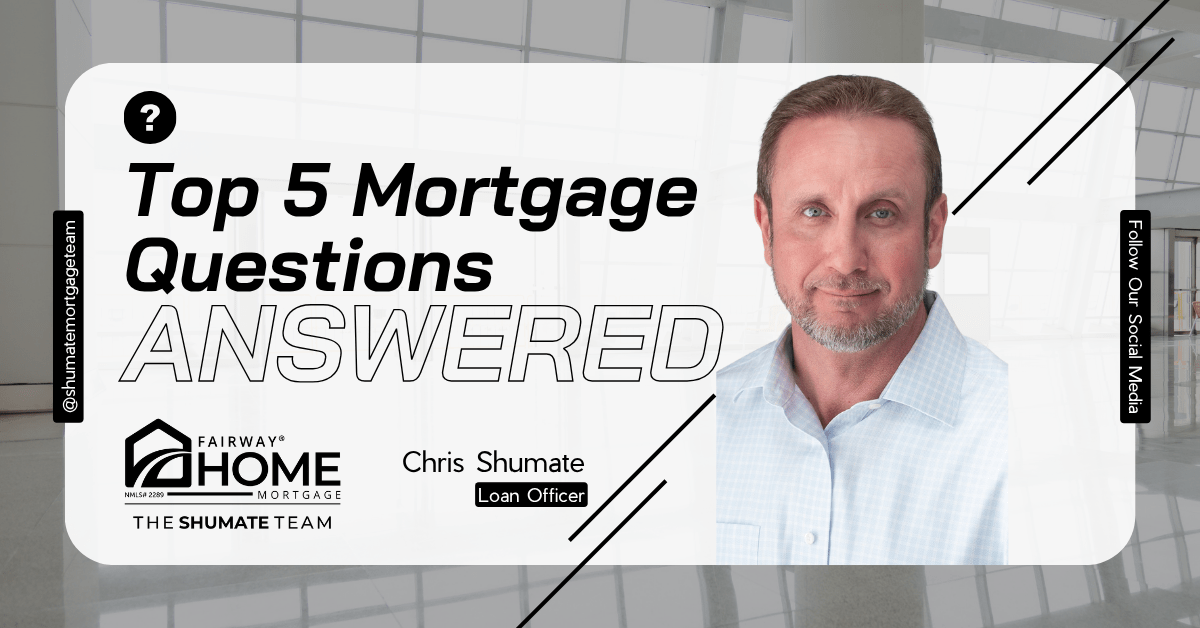
Top 5 Mortgage Questions Answered

By Chris Shumate, Senior Mortgage Loan Officer at Fairway Home Mortgage

📺 Watch the full video here: https://youtube.com/shorts/LWNrmvshBnE?si=kvBr1yq2aDN1pTvQ


When it comes to getting a mortgage, it’s completely normal to have questions—especially in today’s market. After helping more than 3,500 families finance their homes over the years, I’ve learned that most people share the same core concerns.

So, let’s break down the Top 5 Mortgage Questions I get asked the most—and the clear, simple answers you deserve.


1. What’s the first step to getting a mortgage?

Start with a pre-approval, not just a pre-qualification.
A pre-approval means we’ve reviewed your income, assets, and credit to determine what you truly qualify for. It gives you confidence, and it tells sellers you’re a serious buyer.


2. How much do I need for a down payment?

This is one of the biggest misconceptions. You don’t need 20% down.
Depending on the loan type, you could buy with as little as:

  • 0% down for qualified VA loans,
  • 3% down for some conventional loans, and
  • 3.5% down for FHA loans.

The right option depends on your situation—and I’ll help you find the one that fits your goals.


3. What affects my interest rate?

Mortgage rates depend on several factors: your credit score, loan type, down payment, and the overall market conditions.
Remember, the Federal Reserve doesn’t set mortgage rates directly—rates move based on investor confidence and inflation expectations. That’s why timing and strategy matter.


4. Should I buy now or wait for rates to drop?

The truth is, no one can perfectly time the market. But here’s what we do know: you can refinance later, but you can’t go back and buy the same home at today’s price.
If the home and the payment fit your budget today, that’s worth strong consideration. When rates drop, we can always look at refinancing to lower your payment.


5. How long does the process take?

At Fairway, we pride ourselves on efficiency and communication.
Once you’re under contract, we can often close your loan in as little as 15–20 business days, depending on your situation. My team handles every detail carefully to make sure you stay informed from start to finish.


Final Thoughts

Buying a home doesn’t have to be confusing or stressful. When you have the right team guiding you, every step becomes clear and manageable.

If you’re thinking about purchasing, refinancing, or just want to get pre-approved, my team and I are here to make the process smooth, transparent, and rewarding.

🏡 Let’s get your questions answered and your goals accomplished.


About the Author:
Chris Shumate is a Senior Mortgage Loan Officer with Fairway Home Mortgage, serving clients across Georgia, Alabama, Tennessee, Florida, South Carolina, and North Carolina. Recognized among the Top 1% Mortgage Originators in America, Chris is known for his precision, transparency, and dedication to educating homebuyers.

The Fed Rate Cut: What You Need to Know About Mortgage Rates

When the Federal Reserve announces a rate cut, it always makes headlines — and it’s easy to assume that means mortgage rates are automatically dropping too.
But that’s one of the biggest misconceptions in the housing market.

Let’s break down what a Fed rate cut really means and how it affects your mortgage options.

🎥 Watch my quick video explanation here:
👉 The Fed Rate Cut Explained – YouTube


🏦 What Is the Federal Funds Rate?

The “Fed rate” refers to the Federal Funds Rate, which is the short-term interest rate banks charge each other for overnight loans. It directly impacts credit cards, auto loans, and home equity lines of credit, but not fixed-rate mortgages.

When the Fed cuts rates, it’s a signal that they’re trying to stimulate borrowing and spending — usually because the economy is slowing down or inflation is cooling.


🏠 Mortgage Rates Don’t Move the Same Way

Here’s where it gets tricky:
Mortgage rates are not set by the Federal Reserve.

Mortgage rates are primarily driven by the bond market, especially the yield on the 10-year U.S. Treasury Note. When investors expect slower growth or lower inflation, they move money into bonds — which can push mortgage rates down even before the Fed acts.

So, mortgage rates move based on how the market reacts to what the Fed says and does, not simply on the Fed’s official rate cut.

Sometimes mortgage rates even rise after a Fed rate cut if investors think inflation could come back or the economy will rebound faster than expected.


📊 What This Means for Homebuyers and Homeowners

If you’re thinking about buying or refinancing, here’s the key takeaway:

✅ Don’t wait for a Fed announcement to decide when to act.
✅ Focus on overall mortgage rate trends and your personal financial goals.
✅ Rate cuts can create opportunity — but timing the market perfectly is nearly impossible.

My advice: stay informed, get pre-qualified early, and make decisions based on your long-term goals, not short-term news cycles.


💬 Final Thoughts

After more than 25 years in mortgage lending, I’ve seen how confusion around “the Fed rate” can cause hesitation that costs homebuyers great opportunities.
Remember — the Fed influences the economy, but the market drives mortgage rates.

If you’d like to understand how today’s market impacts your homebuying or refinancing plans, my team and I are here to guide you with clarity, precision, and care.

📞 Contact me anytime at Fairway Home Mortgage.
Let’s make sure you’re positioned for success — no matter what the Fed decides next.

Chris Shumate
Senior Mortgage Loan Officer | Fairway Home Mortgage
Serving GA, AL, TN, FL, SC, and NC