Chris Shumate – Fairway Home Mortgage Voted Best of Gwinnett 2025

Chris Shumate – Fairway Home Mortgage Voted Best of Gwinnett 2025

We are honored and excited to announce that Chris Shumate – Fairway Home Mortgage has been officially Voted Best of Gwinnett 2025 in the Financial Services category!

This recognition is especially meaningful because Best of Gwinnett is determined by community votes and customer support throughout Gwinnett County, Georgia. We are incredibly grateful to the families, homeowners, referral partners, and local supporters who made this possible.

👉 View the official winners list here:
https://www.guidetogwinnett.com/best-of/winners/2025/financial-services


What “Best of Gwinnett” Means

Each year, Best of Gwinnett, presented by Gwinnett Magazine, highlights outstanding businesses and professionals across Gwinnett, Georgia. The process includes:

  • Community nominations
  • Online voting by local residents
  • Verification and review by the Best of Gwinnett team

Being named among the best in Financial Services in Gwinnett County reflects not only professional excellence, but also consistent community trust and client satisfaction.


Serving Gwinnett County with Excellence

As a trusted mortgage lender in Gwinnett, Georgia, Chris Shumate has built a reputation for integrity, communication, and results. Through The Shumate Team at Fairway Home Mortgage, clients receive personalized guidance whether they are:

  • First-time homebuyers in Gwinnett County
  • Moving up to their next home
  • Refinancing in Georgia
  • Investing in real estate
  • Relocating to the Gwinnett area

Chris Shumate – Fairway Home Mortgage is committed to making the home loan process clear, smooth, and stress-free. Our mission is simple: help families confidently achieve homeownership in Gwinnett, GA and beyond.


Why Homebuyers in Gwinnett Choose The Shumate Team

The Shumate Team is proud to serve communities throughout:

  • Lawrenceville
  • Buford
  • Suwanee
  • Duluth
  • Dacula
  • Snellville
  • Peachtree Corners
  • And surrounding Gwinnett County areas

With years of experience in the Gwinnett real estate and mortgage market, Chris Shumate understands local trends, competitive financing strategies, and how to position buyers for success in today’s market.

Being voted Best Mortgage Company in Gwinnett 2025 reinforces our commitment to delivering five-star service every step of the way.


Thank You, Gwinnett!

To our clients, referral partners, real estate agents, friends, and family — thank you for voting and supporting Chris Shumate – Fairway Home Mortgage.

We do not take your trust lightly. This award belongs to our entire community.

If you’re buying, refinancing, or simply exploring your options in Gwinnett County, Georgia, we would love to help.

📞 Chris Shumate – Fairway Home Mortgage

📱 Phone: (404) 791-3155
📧 Email: chriss@fairwaymc.com
🌐 Website: http://www.chrisshumatefairway.com/

Let The Shumate Team show you why we were voted Best of Gwinnett 2025.

Your home journey starts here.

Using Your Tax Refund for a Down Payment on a Home

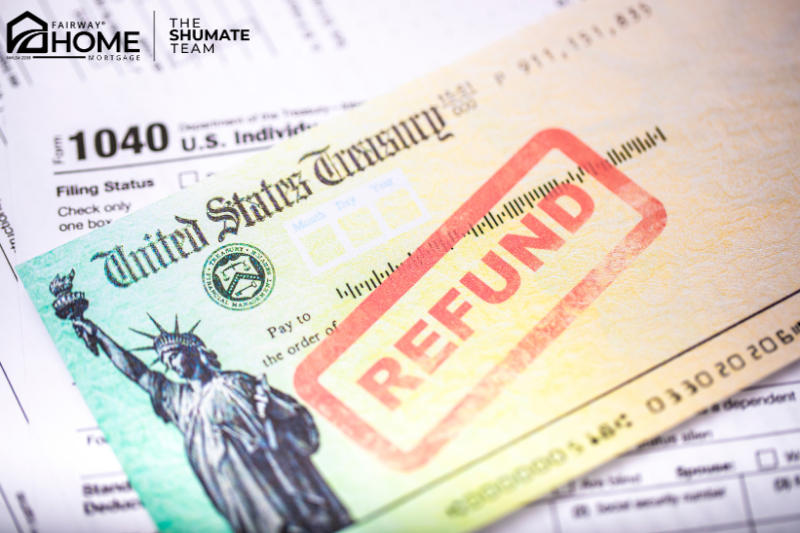
Tax season often brings a welcome financial boost. For many buyers, a tax refund can be the extra push needed to move from “thinking about buying” to actually becoming a homeowner. If you’re planning to buy a home in Georgia or anywhere in the Southeast, your tax refund may be a smart way to help cover your down payment or other upfront costs.

For many thoughtful, research-driven buyers, understanding how to use existing funds wisely is what turns uncertainty into confidence. When used strategically, your tax refund can move you from planning to purchasing much faster than you might expect.

Can You Use a Tax Refund for a Down Payment?

Yes—you absolutely can. A tax refund is considered an acceptable source of funds for a down payment and closing costs. Because the money is yours and easy to document through your tax return and bank deposit, it’s typically straightforward for lenders to verify.

Many of the first-time homebuyers I work with prefer clarity and transparency in the process. Using a tax refund checks both boxes—it’s simple, documented, and predictable. Buyers often apply their refund toward a down payment, closing costs, prepaid expenses like homeowners insurance, or even to reduce the loan amount.

How Much Do You Really Need for a Down Payment?

One of the most common misconceptions I hear—especially from first-time buyers who have spent years researching the market—is that you need 20% down to buy a home. That’s not true.

There are several loan programs designed to make homeownership more accessible:

Conventional loans may allow as little as 3% down for qualified buyers. FHA loans typically require 3.5% down. VA loans offer 0% down for eligible veterans and active-duty service members. USDA loans may also offer 0% down in eligible rural areas.

Understanding these options is key for buyers who value informed decision-making. When paired with a tax refund, many buyers find that the financial barrier to entry is much lower than they expected.

How Your Tax Refund Can Strengthen Your Buying Power

Even if your tax refund doesn’t fully cover your down payment, it can still play an important role in your overall strategy. Applying your refund thoughtfully can reduce the amount of money you need at closing, improve monthly affordability, or create a stronger financial profile for loan approval.

Some buyers choose to use part of their refund to pay down credit card balances. This can improve debt-to-income ratios and help create a more stable, confident mortgage application—something especially important for buyers who want proof and predictability before moving forward.

Important Tips Before Using Your Refund

Planning matters. I always recommend depositing your tax refund directly into your bank account so it’s easy to track and verify. Avoid large unexplained cash deposits, and hold off on major purchases—such as buying a car, furniture, or appliances—until after you’ve closed on your home.

For buyers who value structure and clarity, the best first step is a conversation. Talking with a mortgage professional early allows us to map out exactly how your refund should be used based on your loan options and long-term goals.

Buying a Home in Georgia and the Southeast

Homebuying isn’t one-size-fits-all. Loan programs, home prices, and assistance options vary by location. Buyers across Georgia, Alabama, Tennessee, Florida, South Carolina, and North Carolina may also qualify for state or local down payment assistance programs that can be combined with personal funds like a tax refund.

Working with a local mortgage expert who understands regional guidelines, documentation requirements, and market nuances can make the process feel far more manageable—especially for buyers who want facts, not pressure.

Turn Your Tax Refund Into a Long-Term Investment

For many first-time homebuyers, the decision to buy isn’t about rushing—it’s about feeling confident, informed, and prepared. Instead of spending your tax refund on short-term expenses, consider using it as an investment in long-term stability and equity through homeownership.

A well-planned purchase creates clarity, builds wealth over time, and replaces uncertainty with confidence.

Ready to Explore Your Options?

If you’re thinking about buying a home and want clear answers—not hype—I’m here to help. I’ll walk you through your loan options, review how your tax refund can be used, and help you understand the numbers so you can move forward with confidence.

Whether you’re early in your research or ready to take the next step, a simple conversation can bring a lot of clarity. When you’re ready, let’s talk and see how your tax refund can help make homeownership a reality.

— Chris Shumate
Senior Mortgage Loan Officer | Fairway Home Mortgage

📞 (404) 791-3155
📧 chriss@fairwaymc.com
🌐 http://www.chrisshumatefairway.com

Follow for mortgage tips and updates:
📱 Instagram | Team Instagram | Facebook | 🎥 YouTube

What Happens After You’re Pre-Approved for a Mortgage

Pre-Approval Is a Big Milestone — Here’s What Comes Next

Getting pre-approved for a mortgage is a huge milestone—and one I love celebrating with my clients. It means we’ve reviewed your financial information and confirmed what you can comfortably afford, whether you’re buying a home in Georgia, Metro Atlanta, or anywhere across the Southeast. That said, pre-approval isn’t the finish line. It’s the starting point of the homebuying journey. Knowing what happens next can help you feel confident, prepared, and in control as you move toward closing day.

Start Your Home Search with Confidence

Once you’re pre-approved, you can confidently begin your home search within a clear price range. This is where having the right real estate agent makes a big difference. Across Georgia and the Southeast, markets can move quickly, and your pre-approval shows sellers that you’re serious, qualified, and ready to move forward. In competitive areas like Metro Atlanta, Gwinnett County, and North Georgia, this can give you a real advantage when submitting an offer.

Make an Offer and Negotiate

When you find the right home, your real estate agent will help you submit an offer that reflects current market conditions. This may include negotiations around purchase price, closing timelines, inspections, or seller concessions. Once your offer is accepted, the home officially goes under contract. At that point, my team and I move your loan from pre-approval into full underwriting to keep everything on track for closing.

Be sure to watch my short video below, where I walk you through this mortgage process milestone step by step and explain what to expect after you’re pre-approved and under contract on a home.

Under Contract On A Home? What Happens Next In the Mortgage Process

Complete the Loan Application

After you’re under contract, you’ll complete a formal mortgage application. We’ll request updated documentation to verify income, assets, and employment, which is a normal and important part of the process. It’s best to keep your finances steady during this time. Avoid opening new credit accounts, making large purchases, or changing jobs without checking with me first, as even small changes can impact your loan approval.

Home Inspection and Appraisal

Most contracts include a home inspection period, which allows you to identify potential issues and negotiate repairs if needed. Your lender will also order a home appraisal to confirm the property’s value supports the purchase price. This step protects you and helps ensure the loan aligns with current market value, which is especially important in fast-moving Georgia and Southeast housing markets.

Underwriting and Final Approval

Underwriting is where everything comes together. The underwriter reviews your loan file to ensure it meets lending guidelines. You may be asked for additional documentation during this stage, which is completely normal. Responding promptly helps keep the process moving smoothly toward final approval.

Clear to Close and Closing Day

Once underwriting is complete, you’ll receive the words every buyer wants to hear: clear to close. On closing day, you’ll sign your final loan documents, take care of any remaining closing costs, and receive the keys to your new home. Whether you’re buying your first home in Georgia or purchasing somewhere else in the Southeast, this is the moment it all becomes real.

Final Thoughts from Chris

Pre-approval gives you a strong foundation, but the key to a smooth home purchase is communication, preparation, and having the right mortgage team guiding you along the way. My goal is always to make the mortgage process clear, predictable, and stress-free so you can focus on finding the right home and enjoying the journey. If you’re pre-approved or thinking about getting started anywhere in Georgia or the Southeast, my team and I are here to help from the first conversation all the way to closing day.

📞 (404) 791-3155
📧 chriss@fairwaymc.com
🌐 http://www.chrisshumatefairway.com

Follow for mortgage tips and updates:
📱 Instagram | Team Instagram | Facebook | 🎥 YouTube

Georgia Homestead Exemption: What Homeowners Need to Know for 2026

If you’ve recently purchased a home in Georgia—or you currently own and live in your home as your primary residence—there’s an important tax benefit you should know about: the Georgia Homestead Exemption.

A large number of Georgia homeowners qualify for a homestead exemption but never apply. Even fewer understand how much this exemption can reduce their property tax bill each year. The good news? Applying is straightforward, and once you’re approved, the savings can continue year after year.

Below, I’ll walk you through what the Georgia Homestead Exemption is, who qualifies, how to apply, and key deadlines to know for 2026.

What Is the Georgia Homestead Exemption?

The Georgia Homestead Exemption is a property tax exemption that reduces the assessed value of your primary residence. When your taxable value goes down, so does the amount of property taxes you owe.

This exemption applies only to your legal residence, meaning the home you occupy as your primary home—not a rental or investment property.

For many Georgia homeowners, this is one of the simplest ways to create ongoing savings while building long-term home equity.

Where and When Do You Apply?

You must apply for the homestead exemption in the county (or city) where your home is located. Each county tax assessor’s office may require slightly different documentation and application forms.

Important Deadline

For the 2026 tax year, you must file your application no later than April 1, 2026.

If you miss this deadline, the exemption will not take effect until the following year—so timing matters.

Are You Eligible for the Georgia Homestead Exemption?

To qualify, you must meet the following requirements:

  • You owned the property as of January 1 of the year you are applying
  • The home is your primary legal residence
  • You occupy the property (it cannot be a rental or investment property)
  • You are not claiming a homestead exemption on another property, in Georgia or any other state

What If You’re Temporarily Not Living in the Home?

If you are temporarily away due to medical or health reasons, you may still qualify. In those situations, a family member or friend can contact the county tax commissioner on your behalf to assist with the exemption.

Get Your Documentation Ready

Once you confirm eligibility, gather the documents required by your county. While requirements vary, most counties request:

  • Property address
  • Homeowner’s name(s)
  • Parcel ID number
  • Proof of residency (such as a Georgia driver’s license)
  • Recorded deed (especially for new homeowners)

Always check with your local county tax assessor to ensure you have everything needed before submitting your application.

Filing the Application

Applications are filed directly with your county tax assessor or tax commissioner’s office. Some counties allow online filing, while others require in-person or mailed applications.

Here’s the good news:
Once your homestead exemption is approved, it typically automatically renews each year, as long as:

  • You continue living in the home
  • Ownership doesn’t change
  • The property remains your primary residence

If the home becomes a rental or your primary residence changes, the exemption no longer applies.

Types of Georgia Homestead Exemptions

Georgia offers several types of homestead exemptions depending on age, income, military service, or survivor status. Below are some of the most common options.

Standard Georgia Homestead Exemption

This is the most widely used exemption and applies to many homeowners across Georgia, including first-time buyers and long-term homeowners.

Exemption for Homeowners Age 65 and Older

If you or your spouse are 65 or older and your income was $10,000 or less in the prior year, you may qualify for a $4,000 exemption from all county ad valorem taxes. Certain retirement and Social Security income may be excluded when determining eligibility.

Disabled Veteran or Surviving Spouse Exemption

Disabled veterans may qualify for an exemption of $60,000 plus an additional indexed amount set annually by the U.S. Department of Veterans Affairs. Eligible surviving spouses may also qualify.

Surviving Spouse of a U.S. Service Member

An unmarried surviving spouse of a service member who died due to armed conflict or war may receive a homestead exemption from county, municipal, and school ad valorem taxes, subject to VA-determined amounts.

Surviving Spouse of a Peace Officer or Firefighter

An unmarried surviving spouse of a peace officer or firefighter killed in the line of duty may qualify for a full homestead exemption on the value of the home, as long as the home remains their primary residence.

For most homeowners, the standard homestead exemption will apply—but it’s always worth checking all options to ensure you’re receiving the maximum benefit available.

Final Thoughts

Owning a home is one of the most powerful wealth-building tools available—and the Georgia Homestead Exemption is a smart way to protect that investment and reduce annual housing costs.

If you’ve purchased a home recently or think you may qualify, I strongly encourage you to apply before April 1, 2026.

For the most up-to-date details and official guidance, visit the Georgia Department of Revenue here:
👉 https://dor.georgia.gov/property-tax-homestead-exemptions

Ready for the Next Step?

If you have questions about homeownership, refinancing, or how your home fits into your overall financial picture, my team and I are here to help.

Want to stay on top of your home’s value and equity?
Subscribe to our Homebot and receive a free monthly reports designed to help you build and manage your wealth with confidence:
👉 https://hmbt.co/2mt7k4

If you’re buying, refinancing, or just want clarity around your options as a Georgia homeowner, reach out anytime. Education and confidence always come first.

— Chris Shumate
Senior Mortgage Loan Officer | Fairway Home Mortgage
VA Home Loans: Serving Those Who’ve Served with Fairway and Chris Shumate

Honoring Service Through Homeownership

At Fairway Home Mortgage, we take pride in serving those who’ve served our country. The VA mortgage loan is one of the most powerful benefits available to eligible veterans, active-duty service members, and surviving spouses. It offers a path to homeownership that honors their commitment and sacrifice — with financial advantages designed to make buying a home more attainable.


What Is a VA Loan?

A VA loan, backed by the U.S. Department of Veterans Affairs, allows qualified borrowers to purchase a home with no down payment, no private mortgage insurance (PMI), and competitive interest rates. These loans are provided by lenders like Fairway, not directly by the government — meaning you still receive the personalized guidance and care of your local mortgage expert: Chris Shumate at Fairway Home Mortgage.


Watch this video here for VA Loans Questions Answered with Chris

Benefits of a VA Home Loan

  • 0% Down Payment: No down payment required for most borrowers.
  • No PMI: Save monthly without private mortgage insurance.
  • Competitive Rates: Benefit from rates that are often lower than conventional loans.
  • No prepayment penalties
  • 100% financing with full VA entitlement*
  • Fixed- and adjustable-rate mortgages
  • VA financing fees can be lumped into the total loan amount
  • A variety of eligible property types, including townhomes and VA-approved condos
  • Flexible Credit Guidelines: Designed to make homeownership possible for more veterans and service members.
  • Assumable Loans: Another qualified veteran can take over your existing VA loan and its terms.
  • *A down payment is required if the borrower does not have full VA entitlement or when the loan amount exceeds the VA county limits. VA loans subject to individual VA Entitlement amounts and eligibility, qualifying factors such as income and credit guidelines, and property limits.

VA Refinance Options

Owning a home with a VA loan opens the door to valuable refinancing opportunities that can help veterans and service members better manage their finances and reach their goals.

Cash-Out Refinance

If you’re already a homeowner, a VA cash-out refinance may help you pay for major expenses such as college tuition, debt consolidation, or home improvements. This option allows you to take cash out of your home equity by replacing your current mortgage with a new loan that is more than the amount owed.
You can also refinance a non-VA loan into a VA loan with a cash-out refinance, making it a great choice for homeowners looking to take advantage of their VA benefits.

Interest Rate Reduction Refinance Loan (IRRRL)

An Interest Rate Reduction Refinance Loan (IRRRL) may help lower your interest rate and reduce your monthly payments by refinancing your existing VA loan. This option allows you to convert an adjustable-rate mortgage (ARM) into a fixed-rate mortgage, providing more long-term stability.
However, unlike the cash-out refinance, you cannot receive cash from loan proceeds with an IRRRL — it’s strictly designed to improve your loan terms and payment efficiency.

Why Work with Chris Shumate at Fairway Home Mortgage

With more than 25 years of experience in mortgage lending, Chris Shumate is a Certified Military Mortgage Specialist™, proudly supporting the American Warrior Initiative (AWI) — a nonprofit organization backed by Fairway.
AWI’s mission is to educate, encourage, and inspire Americans to give back to our military through community involvement and veteran support programs. Learn more about AWI here.

Chris and his team serve homeowners across Georgia, Alabama, Tennessee, Florida, South Carolina, and North Carolina, offering expert guidance, clear communication, and a commitment to excellence from application to closing.


Your Service Deserves a Seamless Experience

Whether you’re buying your first home, refinancing, or relocating after service, Chris understands that every veteran’s journey is unique. His approach focuses on education, precision, and trust — ensuring that each borrower feels supported and informed every step of the way.


Ready to Explore Your VA Loan Options?

If you’re ready to explore your VA loan options, we’re here to guide you every step of the way. Contact Chris Shumate at Fairway Home Mortgage to take advantage of your well-earned benefits and discover how a VA home loan can help you achieve your homeownership goals.

📞 (404) 791-3155
📧 chriss@fairwaymc.com
🌐 http://www.chrisshumatefairway.com

Follow for mortgage tips and updates:
📱 Instagram | Team Instagram | Facebook | 🎥 YouTube

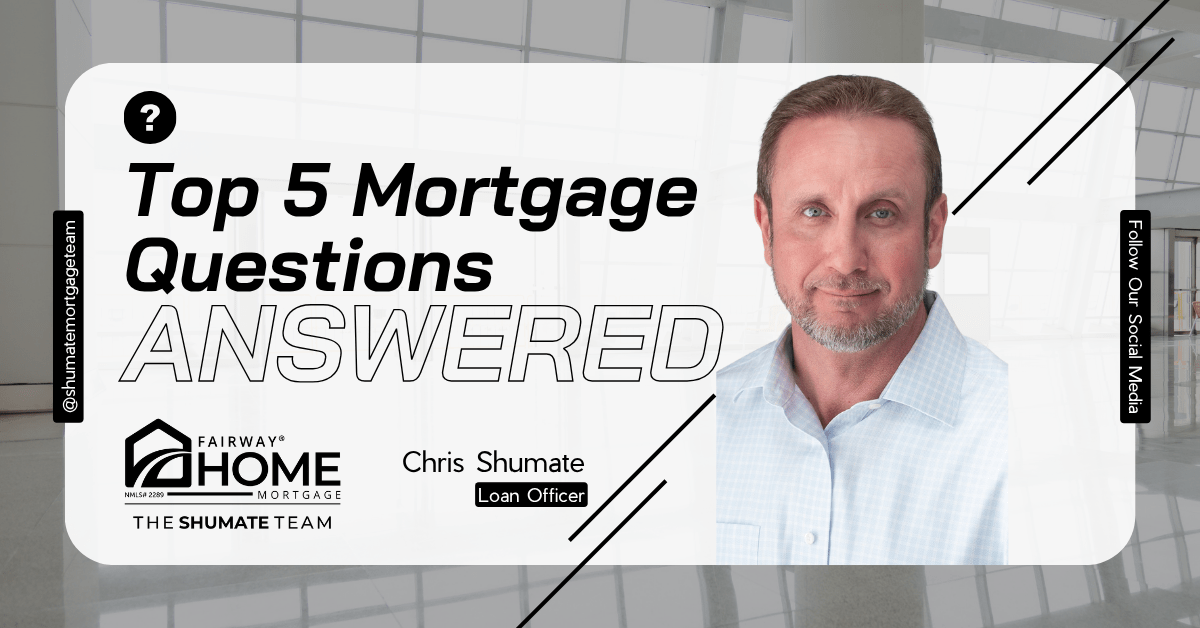
Top 5 Mortgage Questions Answered

By Chris Shumate, Senior Mortgage Loan Officer at Fairway Home Mortgage

📺 Watch the full video here: https://youtube.com/shorts/LWNrmvshBnE?si=kvBr1yq2aDN1pTvQ


When it comes to getting a mortgage, it’s completely normal to have questions—especially in today’s market. After helping more than 3,500 families finance their homes over the years, I’ve learned that most people share the same core concerns.

So, let’s break down the Top 5 Mortgage Questions I get asked the most—and the clear, simple answers you deserve.


1. What’s the first step to getting a mortgage?

Start with a pre-approval, not just a pre-qualification.
A pre-approval means we’ve reviewed your income, assets, and credit to determine what you truly qualify for. It gives you confidence, and it tells sellers you’re a serious buyer.


2. How much do I need for a down payment?

This is one of the biggest misconceptions. You don’t need 20% down.
Depending on the loan type, you could buy with as little as:

  • 0% down for qualified VA loans,
  • 3% down for some conventional loans, and
  • 3.5% down for FHA loans.

The right option depends on your situation—and I’ll help you find the one that fits your goals.


3. What affects my interest rate?

Mortgage rates depend on several factors: your credit score, loan type, down payment, and the overall market conditions.
Remember, the Federal Reserve doesn’t set mortgage rates directly—rates move based on investor confidence and inflation expectations. That’s why timing and strategy matter.


4. Should I buy now or wait for rates to drop?

The truth is, no one can perfectly time the market. But here’s what we do know: you can refinance later, but you can’t go back and buy the same home at today’s price.
If the home and the payment fit your budget today, that’s worth strong consideration. When rates drop, we can always look at refinancing to lower your payment.


5. How long does the process take?

At Fairway, we pride ourselves on efficiency and communication.
Once you’re under contract, we can often close your loan in as little as 15–20 business days, depending on your situation. My team handles every detail carefully to make sure you stay informed from start to finish.


Final Thoughts

Buying a home doesn’t have to be confusing or stressful. When you have the right team guiding you, every step becomes clear and manageable.

If you’re thinking about purchasing, refinancing, or just want to get pre-approved, my team and I are here to make the process smooth, transparent, and rewarding.

🏡 Let’s get your questions answered and your goals accomplished.


About the Author:
Chris Shumate is a Senior Mortgage Loan Officer with Fairway Home Mortgage, serving clients across Georgia, Alabama, Tennessee, Florida, South Carolina, and North Carolina. Recognized among the Top 1% Mortgage Originators in America, Chris is known for his precision, transparency, and dedication to educating homebuyers.