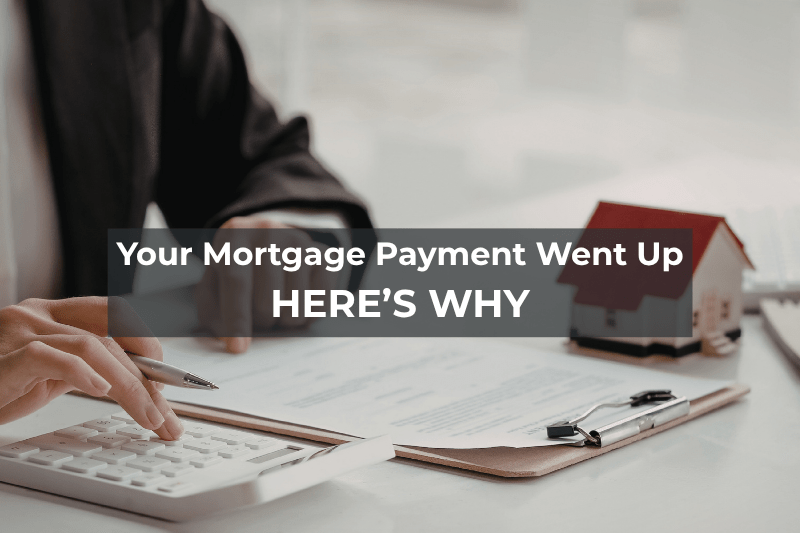
Your Mortgage Payment Went Up — Here’s Why

If you’ve opened your mortgage statement recently and thought, “Why did my payment go up?” — you’re not alone.

This is one of the most common questions homeowners ask. The good news? In most cases, there’s a clear explanation—and even better, there are ways to plan for it.


🎥 Watch: Quick Breakdown


The Real Reason Your Payment Changed

Here’s the key thing to understand:

Your loan itself likely didn’t change.
What changed is what’s included in your monthly payment.

Most mortgage payments include:

  • Principal
  • Interest
  • Property Taxes
  • Homeowners Insurance

Those last two are part of your escrow account—and they can change over time.


1. Property Taxes Increased

Property taxes are one of the most common reasons for a higher payment.

  • Local governments reassess property values
  • Higher home values can mean higher taxes
  • Even small increases can impact your monthly payment

Since taxes are paid through escrow, your lender adjusts your payment accordingly.


2. Homeowners Insurance Went Up

Insurance premiums have been rising nationwide.

This can be due to:

  • Increased construction costs
  • More weather-related claims
  • Market-wide insurance changes

When your premium increases, your monthly escrow payment increases too.


3. Escrow Account Adjustment (The Most Overlooked Reason)

This is where most surprises happen.

Your lender reviews your escrow account once a year:

  • If there’s a shortage → your payment goes up
  • If there’s a surplus → you may get a refund or lower payment

Sometimes, your payment increases not just because of higher taxes or insurance—but because you’re also catching up from a previous shortage.


What This Means for You

The key is understanding what changed and why.

Taking time to:

  • Review your escrow statement
  • Look at your tax and insurance changes
  • Plan ahead for future adjustments

…can help you avoid surprises down the road.


Can You Lower Your Payment?

In some cases, yes. Here are a few options:

  • Shop around for lower homeowners insurance rates
  • Appeal your property tax assessment (if applicable)
  • Explore a refinance strategy
  • Request an escrow review if something doesn’t look right

Every situation is different, so it’s important to look at the full picture.


Work With Someone Who Explains the “Why”

With over 25 years of experience and more than 3,500 families helped, Chris Shumate focuses on making sure clients fully understand their mortgage—not just the numbers, but the reasoning behind them.

Because when you understand what’s happening, you can make better financial decisions.


Let’s Take a Look at Your Situation

If your payment went up and you’re not sure why—or you just want a second opinion—we’re here to help.


🏠 Contact Chris Shumate at Fairway Home Mortgage

📞 (404) 791-3155
📧 chriss@fairwaymc.com

🌐 http://www.chrisshumatefairway.com/

📱 Follow on Instagram: https://www.instagram.com/chris.shumate.mortgage
📱 Follow our team on Instagram: https://www.instagram.com/shumatemortgageteam/
📘 Facebook: https://www.facebook.com/ShumateMortgageTeam/
🎥 YouTube: @chrisshumatemortgage
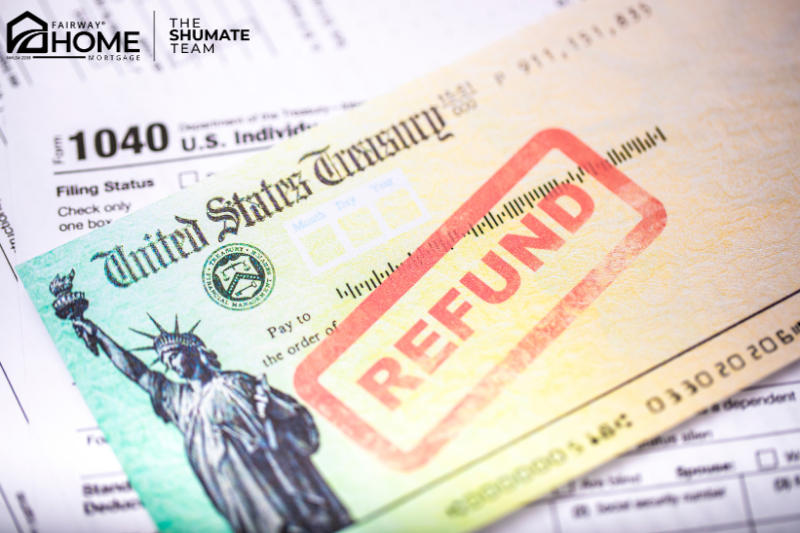
Using Your Tax Refund for a Down Payment on a Home

Tax season often brings a welcome financial boost. For many buyers, a tax refund can be the extra push needed to move from “thinking about buying” to actually becoming a homeowner. If you’re planning to buy a home in Georgia or anywhere in the Southeast, your tax refund may be a smart way to help cover your down payment or other upfront costs.

For many thoughtful, research-driven buyers, understanding how to use existing funds wisely is what turns uncertainty into confidence. When used strategically, your tax refund can move you from planning to purchasing much faster than you might expect.

Can You Use a Tax Refund for a Down Payment?

Yes—you absolutely can. A tax refund is considered an acceptable source of funds for a down payment and closing costs. Because the money is yours and easy to document through your tax return and bank deposit, it’s typically straightforward for lenders to verify.

Many of the first-time homebuyers I work with prefer clarity and transparency in the process. Using a tax refund checks both boxes—it’s simple, documented, and predictable. Buyers often apply their refund toward a down payment, closing costs, prepaid expenses like homeowners insurance, or even to reduce the loan amount.

How Much Do You Really Need for a Down Payment?

One of the most common misconceptions I hear—especially from first-time buyers who have spent years researching the market—is that you need 20% down to buy a home. That’s not true.

There are several loan programs designed to make homeownership more accessible:

Conventional loans may allow as little as 3% down for qualified buyers. FHA loans typically require 3.5% down. VA loans offer 0% down for eligible veterans and active-duty service members. USDA loans may also offer 0% down in eligible rural areas.

Understanding these options is key for buyers who value informed decision-making. When paired with a tax refund, many buyers find that the financial barrier to entry is much lower than they expected.

How Your Tax Refund Can Strengthen Your Buying Power

Even if your tax refund doesn’t fully cover your down payment, it can still play an important role in your overall strategy. Applying your refund thoughtfully can reduce the amount of money you need at closing, improve monthly affordability, or create a stronger financial profile for loan approval.

Some buyers choose to use part of their refund to pay down credit card balances. This can improve debt-to-income ratios and help create a more stable, confident mortgage application—something especially important for buyers who want proof and predictability before moving forward.

Important Tips Before Using Your Refund

Planning matters. I always recommend depositing your tax refund directly into your bank account so it’s easy to track and verify. Avoid large unexplained cash deposits, and hold off on major purchases—such as buying a car, furniture, or appliances—until after you’ve closed on your home.

For buyers who value structure and clarity, the best first step is a conversation. Talking with a mortgage professional early allows us to map out exactly how your refund should be used based on your loan options and long-term goals.

Buying a Home in Georgia and the Southeast

Homebuying isn’t one-size-fits-all. Loan programs, home prices, and assistance options vary by location. Buyers across Georgia, Alabama, Tennessee, Florida, South Carolina, and North Carolina may also qualify for state or local down payment assistance programs that can be combined with personal funds like a tax refund.

Working with a local mortgage expert who understands regional guidelines, documentation requirements, and market nuances can make the process feel far more manageable—especially for buyers who want facts, not pressure.

Turn Your Tax Refund Into a Long-Term Investment

For many first-time homebuyers, the decision to buy isn’t about rushing—it’s about feeling confident, informed, and prepared. Instead of spending your tax refund on short-term expenses, consider using it as an investment in long-term stability and equity through homeownership.

A well-planned purchase creates clarity, builds wealth over time, and replaces uncertainty with confidence.

Ready to Explore Your Options?

If you’re thinking about buying a home and want clear answers—not hype—I’m here to help. I’ll walk you through your loan options, review how your tax refund can be used, and help you understand the numbers so you can move forward with confidence.

Whether you’re early in your research or ready to take the next step, a simple conversation can bring a lot of clarity. When you’re ready, let’s talk and see how your tax refund can help make homeownership a reality.

— Chris Shumate
Senior Mortgage Loan Officer | Fairway Home Mortgage

📞 (404) 791-3155
📧 chriss@fairwaymc.com
🌐 http://www.chrisshumatefairway.com

Follow for mortgage tips and updates:
📱 Instagram | Team Instagram | Facebook | 🎥 YouTube